Blog

A problem that has teased me since long has probably teased a number of people before me, namely the problem of commencement. What comes first, language or thought? Character or Plot? Form or Content?

The human mind is a storehouse of weirdly mystifying activity. It is too deep to be fathomed and too abstract to be given shape. It churns out mysterious questions that defy clear-cut answers. Yet the writer must try to attend to some of these. I would love to get the views of readers on these, on my blog.

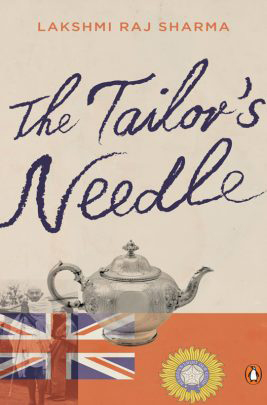
When I was writing THE TAILOR'S NEEDLE and a tragic scene was being composed, I often discovered that I had been crying during its composition and when a comic scene came I would laugh out unknowingly and then look around to see if someone had seen me laughing to myself.


www.youtube.com/watch?v=OHvXDWaWGO0


The Tailor's Needle (both print and ebook) is now available from Amazon.co.uk. Marriages are Made in India is also available to UK buyers here:

http://www.amazon.co.uk/The-Tailors-Needle-Lakshmi-Sharma/dp/0143416766


The first part of Scenes from THE TAILOR'S NEEDLE enacted by teachers and students of the English Dept., Allahabad University, is now available on YouTube and can be watched here:
http://www.youtube.com/watch?v=TFxRCa-2wD8


Writing Fiction in the English Language (Part 4, Plot)


With the plot, the story becomes an author’s story; not his autobiography but his art work. The author’s point of view, his perception of the world, his personality and his voice, all these make up the plot. The plain naked story is dressed into a plot by the novelist or story writer. The plot is an artistic arrangement of the episodes or events of a story. The author decides which part of the story is to be presented first of all, which in the middle and which in the end.  If the story is a chronological narration of events, the plot is the psychological arrangement of events. We can be made to love a murderer if we are first shown his softer side or his human side. Thus we may hate his sin but we don’t hate him. A reorganization of the happenings in the story can change the way we will view it. The arrangement of events therefore is of primary significance in a novel or story as that adds to our perception of the text in question. If we are shown the murderer as murderer directly we will have a different perception of the man.
Plot is very largely the structure of the text. The structure means the following things:
(a)    Character in action. The plan laid out for the characters to unfold themselves. It is not the characters themselves but as they appear, in a certain order, that makes the impact.
(b)    The relationship of the parts of the text to the whole. Through the plot or structure the author makes the parts of the text perform certain roles. If the murderer is shown as a kind and noble person in the first part of the text, the first part will then help to present him (in the second part) differently.
(c)    The shape of the text. The pattern which the author chooses to narrate the story in. I use the word “pattern” because a pattern is inlaid into the structure. It can be a triangular love-affair; a seesaw action in which the rich become poor and vice versa or the powerful get defeated by the weak; or, a circular movement in which we end where we began, and so on.

There seems to be a relationship between the three meanings of the word “plot”. The plot of land on which the house is built is also a kind of structure to build on, like the plot of a novel. Similarly, the plot to carry out a murder or something like a theft is also a plan of some kind that has been designed for the larger course of action that is to follow. Hence the plot of fiction is basically the structure which is designed by the author to superimpose upon.

The story of Adam and Eve is a straightforward narration of the original sin. But when the narrator begins to show effects of that original sin on himself then he has started making a plot of the story. The author is very much a part of the plot. The plot contains the author whereas the story does not. The ancient Greeks had a rather tragic perception of the world and the gods that controlled the world. Hence they made plots out of which the tragic heroes could not escape; they were secondary to the plots. The plot acted like their confining destiny. The Renaissance man often saw the individual as good enough to fight his destiny with his actions, his character. Hence character, rather than plot, was what someone like Shakespeare focused on. The plot in this case, it could be said, resulted from the character. Plays like Romeo and Juliet, where destiny plays such a crucial role are exceptional and few. Of course, every author will need a plot and even Shakespeare needed them for all his plays. But some authors make plots into fortress to confine their people therein whereas others create people who then decide which way the plot will move. There is a kind of author for whom the plot is all important. Thomas Hardy is an example.


Author's Den

Lakshmi Raj Sharma [bio | books | articles | short stories ]

Subscribe to the Lakshmi Raj Sharma Newsletter- Name: Email:
Powered by AuthorsDen